HIPAA-Compliant Private AI
Private AI for Medical Practices: HIPAA Compliance Without Compromise
Your staff is using AI with patient data right now. They're being productive — and creating a reportable HIPAA breach with every query. Private AI deployment gives your practice the same efficiency gains on hardware you own, where Protected Health Information never touches a third-party server.
The HIPAA Problem With Cloud AI
HIPAA requires that any entity processing Protected Health Information (PHI) must be the covered entity itself or a business associate operating under a signed Business Associate Agreement (BAA).
When a staff member pastes patient data into ChatGPT, Claude, or Gemini:
- PHI is transmitted to a third party. The AI provider receives and processes patient data on their infrastructure.
- No BAA exists. Consumer-tier AI tools do not offer BAAs. Even most enterprise subscriptions have significant carve-outs that don't cover all PHI processing scenarios.
- You can't verify data handling. You don't know where the data is stored, how long it's retained, or whether it's used for model training.
- The breach is immediate. The moment PHI enters a system without a BAA, a violation has occurred. There is no grace period.
The Penalty Structure
Each patient record processed through a cloud AI tool is a separate violation. If a medical assistant uses ChatGPT to summarize intake notes for 10 patients in a single week, that's 10 violations. At Tier 2 minimums, that's $10,000 in penalties from one employee in one week. Scale that across your practice over months of undetected shadow AI usage, and the exposure is staggering.
What We Actually See in Medical Practices
During AI Operations Audits for medical practices, the most common AI usage patterns we discover are:
- Clinical documentation: Staff using AI to draft SOAP notes, referral letters, and patient summaries by pasting patient information into ChatGPT.
- Prior authorization: Staff pasting clinical information and denial reasons into AI tools to draft appeal letters faster.
- Patient communication: Front desk staff drafting emails and messages with clinical context — all PHI.
- Coding and billing: Billing staff using AI with diagnosis codes, procedure details, and patient identifiers.
- Referral management: Summarizing patient cases including clinical history, medications, and diagnoses for specialist referrals.
Every one of these use cases delivers real productivity gains. Your staff isn't wrong that AI makes them faster and more accurate. They're wrong about where that AI processing should happen. The answer isn't to ban AI — it's to deploy it on infrastructure you control.
The Solution: Private AI on Your Hardware
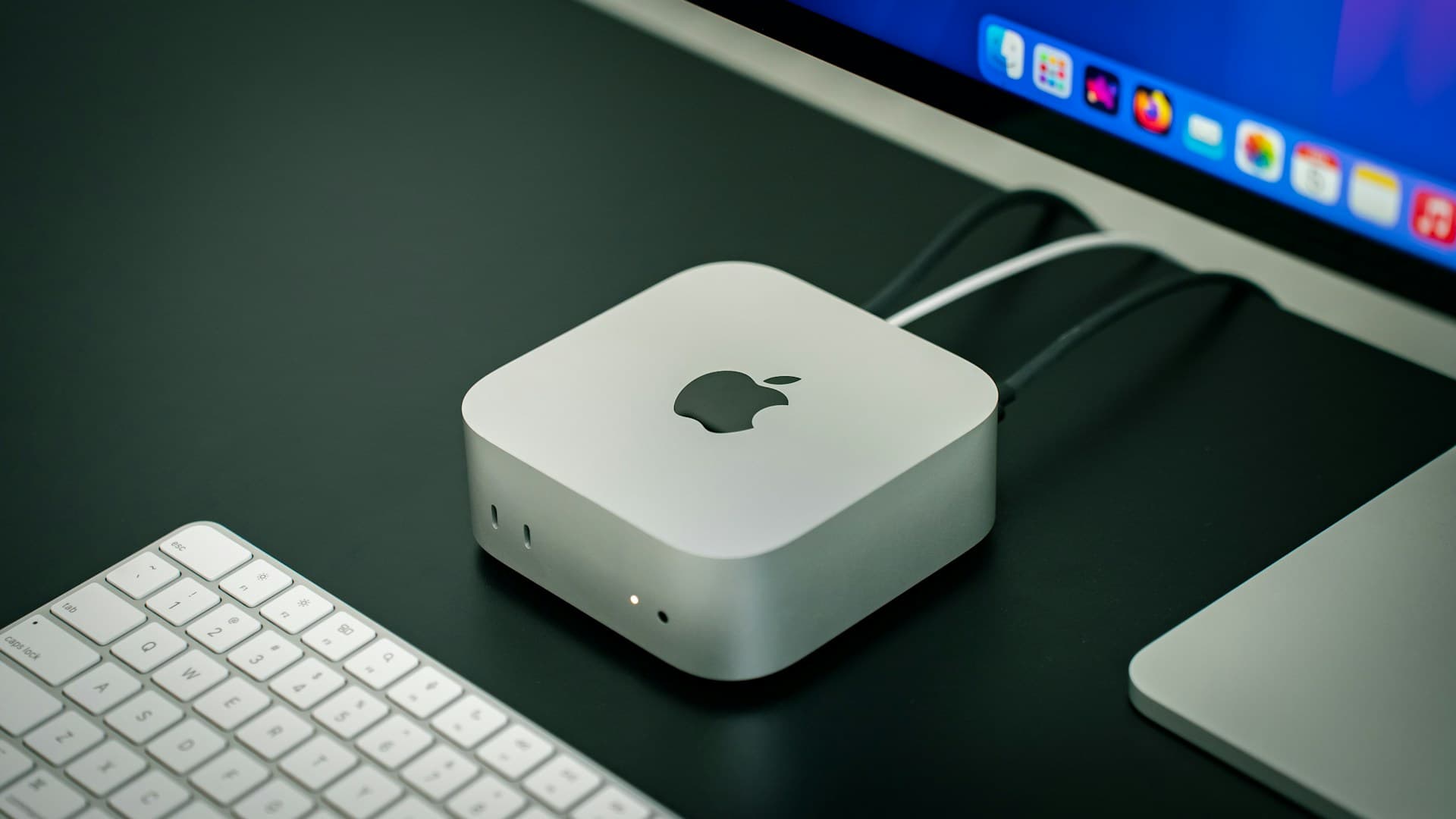
Private AI deployment means the AI model runs on a device in your office. A Mac Mini M4 Pro sits in your server room or IT closet. Open-source AI models are installed locally. Your staff accesses AI through a web portal on your office network. Patient data is processed locally. Nothing touches a third-party server. No BAA needed because no external entity processes your PHI.
Automated Intake Processing
New patient information is extracted, structured, and entered into your EHR/PM system automatically. Insurance verification, demographic data entry, medical history organization — 45 minutes of front desk time drops to 5. All processing on your hardware.
Clinical Documentation Assistance
AI assists with SOAP notes, referral letters, patient summaries, and discharge instructions. Properly structured, consistent formatting, based on your practice's documentation standards. Staff input stays on your machine — no PHI transmitted anywhere.
Prior Authorization Drafting
Clinical information and denial reasons are processed locally to generate appeal letters, supporting documentation, and authorization requests. Your most time-consuming administrative task gets dramatically faster without any PHI leaving your network.
AI Receptionist & Scheduling
24/7 phone answering, appointment booking, and patient routing. Handles inbound calls, qualifies the reason for visit, checks availability, and books appointments directly in your scheduling system. Runs on managed cloud (handles public calls — no PHI at intake stage).
Referral Management
Patient case summaries generated from your records for specialist referrals. Clinical history, current medications, relevant diagnoses — organized and formatted for the receiving provider. Every bit of patient data stays on your hardware.
Smart Data Classification
The system automatically classifies each request. PHI-containing queries route to your local AI model. Non-PHI tasks — drug interaction lookups, billing code research, generic patient education materials — route to cloud AI for maximum quality. One portal, automatic routing.
The Compliance Position
With private AI infrastructure deployed in your practice:
- No third-party data processing. No BAA needed because no provider touches your PHI.
- Fully auditable. Every interaction is logged on your hardware. You control the audit trail.
- Controllable. You set retention policies, access controls, and deletion schedules.
- Defensible. If OCR investigates, you can demonstrate that PHI processing occurs exclusively on your facility's hardware. That's the strongest compliance position available for AI usage.
Cost vs. Risk
The deployment costs less than the minimum penalty for a single Tier 3 violation. For a practice processing hundreds of patient interactions weekly, the risk-adjusted ROI isn't close — private AI deployment is dramatically less expensive than the alternative.
ROI Beyond Compliance
Compliance protection is the floor, not the ceiling. The operational benefits are substantial:
- Patient intake: 45 minutes → 5 minutes per patient. For a practice seeing 30 patients/day, that's 20+ hours of front desk time recovered weekly.
- Clinical documentation: Faster, more consistent SOAP notes and referral letters. Less time charting, more time with patients.
- Prior authorizations: The single most time-consuming administrative task in most practices, dramatically accelerated.
- After-hours coverage: AI receptionist handles calls 24/7. No more missed appointments from after-hours voicemail.
How It Works
- 15-minute call — We learn about your practice, specialties, and current technology. Free consultation to determine fit.
- AI Operations Audit ($3,500) — We assess your practice's current AI exposure, classify data by PHI sensitivity, deliver a written AI usage policy, and build a working prototype. ~3 business days. Full fee credited toward deployment.
- Build & Deploy (starting at $18,000) — Hardware installed, models configured, EHR/PM integrated, staff trained. 1-2 weeks.
- Managed Services ($2,997/mo) — Monthly updates, monitoring, and optimization. The system improves every month based on your practice's actual usage patterns.
Frequently Asked Questions
Can my medical practice use ChatGPT?
For tasks that don't involve PHI — general medical research, drug interaction lookups, patient education materials — cloud AI tools are generally acceptable. For anything involving patient data, cloud AI tools without a BAA create a HIPAA violation. Private AI deployment gives your staff a single portal that automatically routes PHI queries to local hardware and non-PHI queries to cloud AI.
Do I need a BAA with Northline Systems?
Because the AI runs on hardware in your facility and we don't process or access PHI remotely, the standard deployment doesn't require a BAA. If your compliance officer wants one for belt-and-suspenders protection, we're happy to execute one.
What EHR/PM systems do you integrate with?
We integrate with most modern EHR and practice management systems. During the audit, we assess your specific system and design the integration architecture accordingly.
Find out if your practice has AI exposure.
Book a free 15-minute call. We'll discuss your practice, current technology, and what a HIPAA-compliant AI deployment looks like for your specific situation.
Schedule a 15-Minute Fit CallAI Operations Audit: $3,500 · Full fee credited toward your build